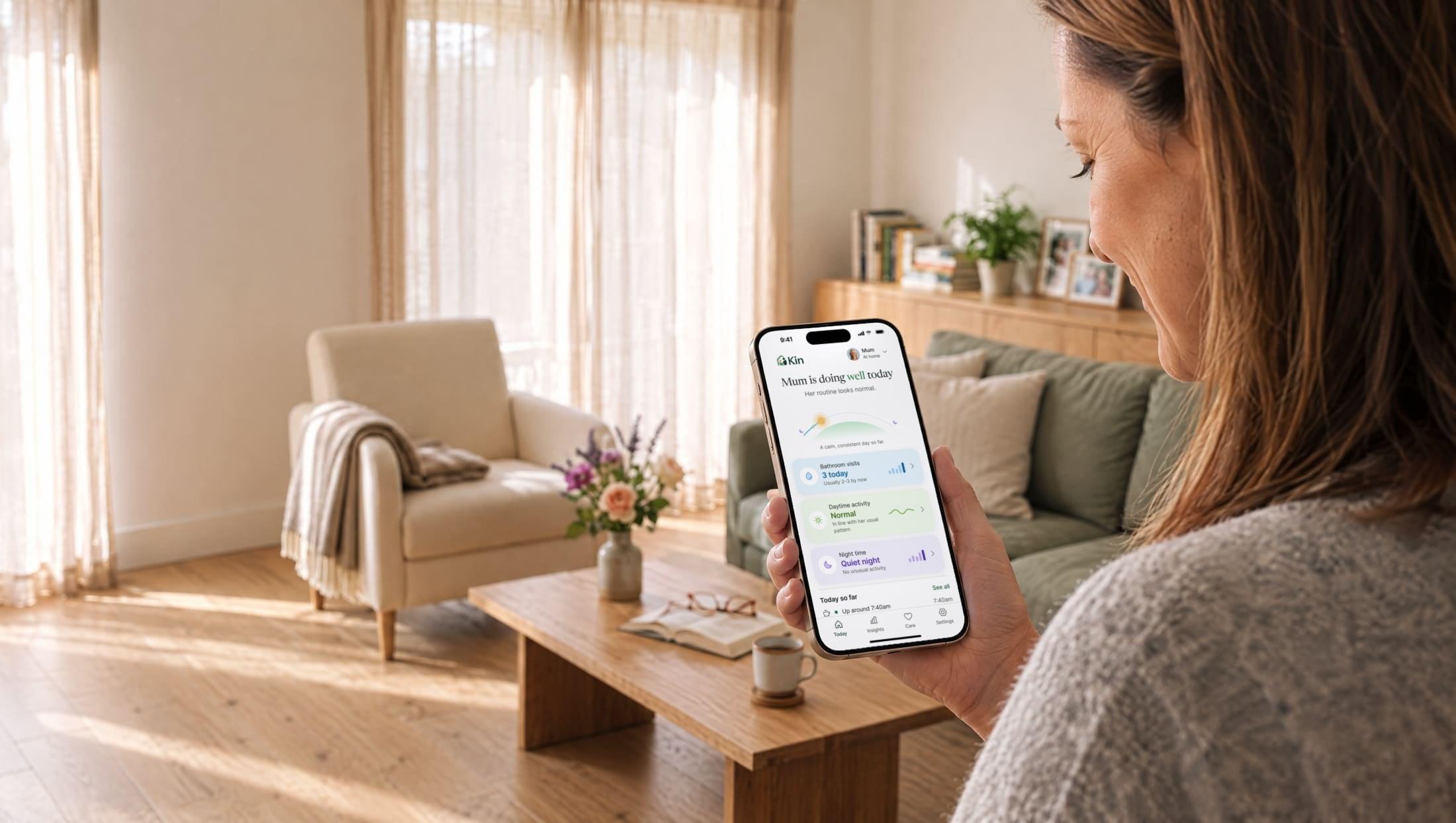
Help them stay independent at home.
Kin's discreet, camera-free sensors respect your loved one's privacy while learning their usual routines. When patterns change, Kin lets you know, helping you decide when a personal check-in could help.
A usual day, at a glance.
Example updates show how Kin compares activity with a usual day. Sensors work in the background, with nothing your parent has to wear or remember to do.
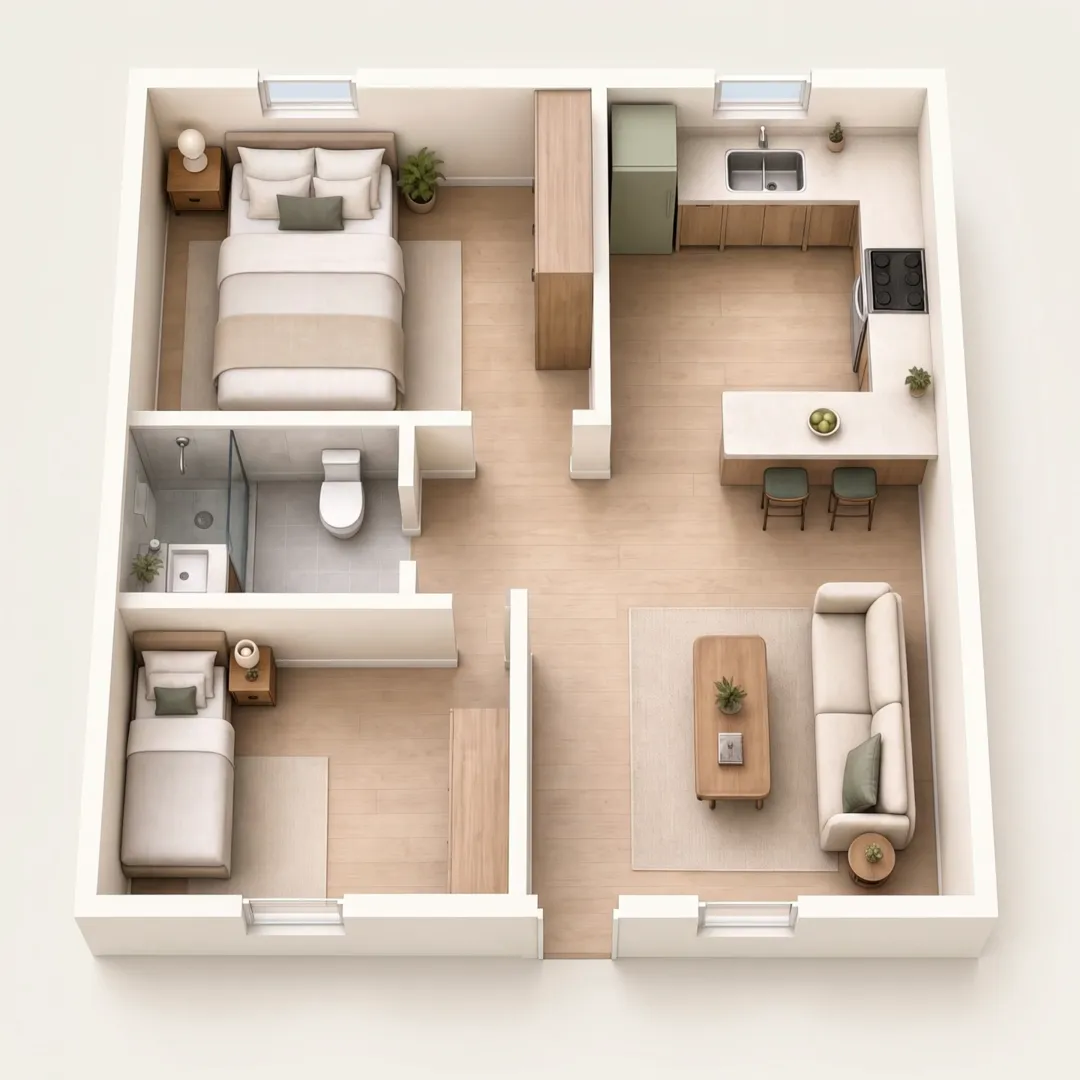
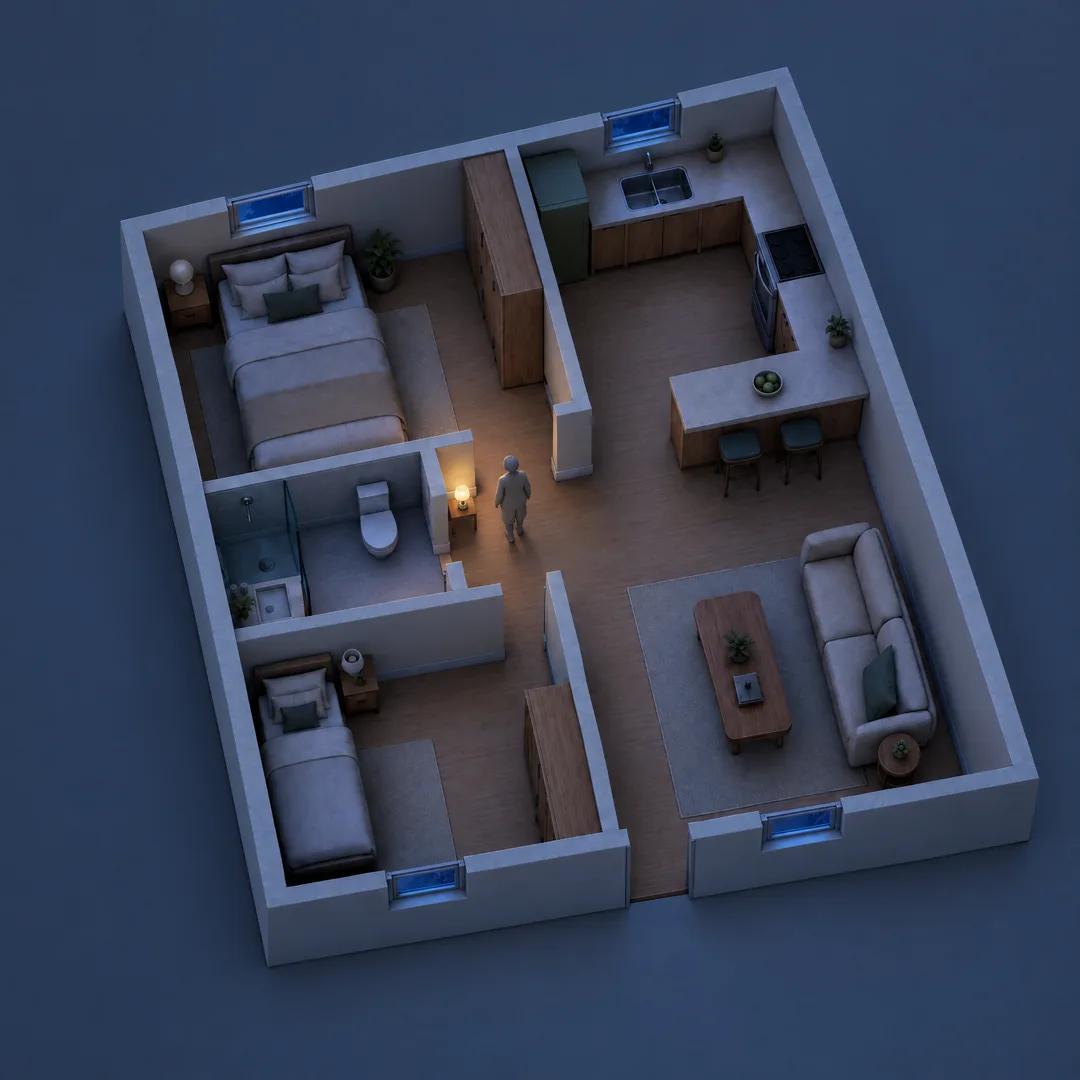
Morning started around the usual time
Recorded activity follows the usual pattern.
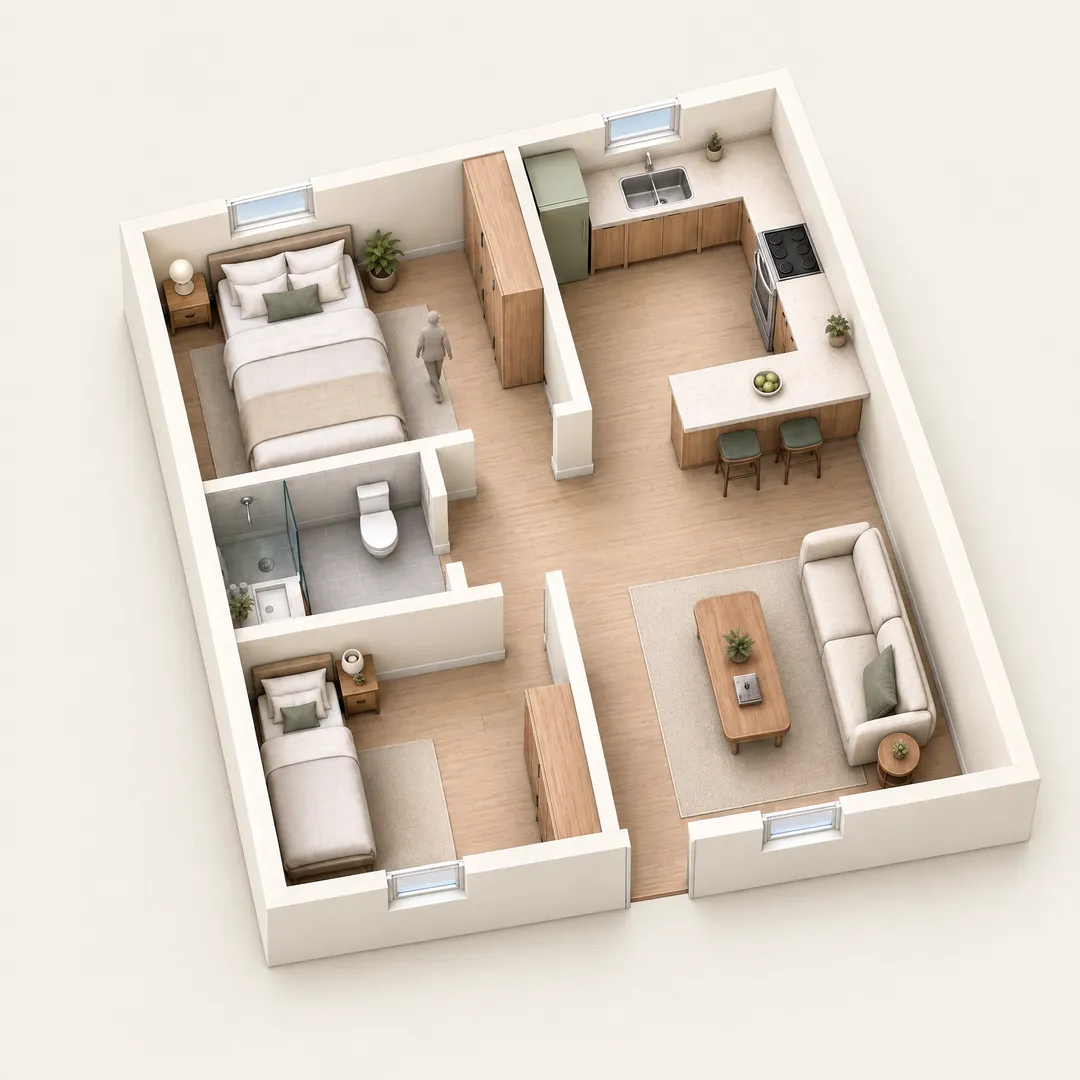
The day looks as expected
Recorded activity follows the usual pattern.
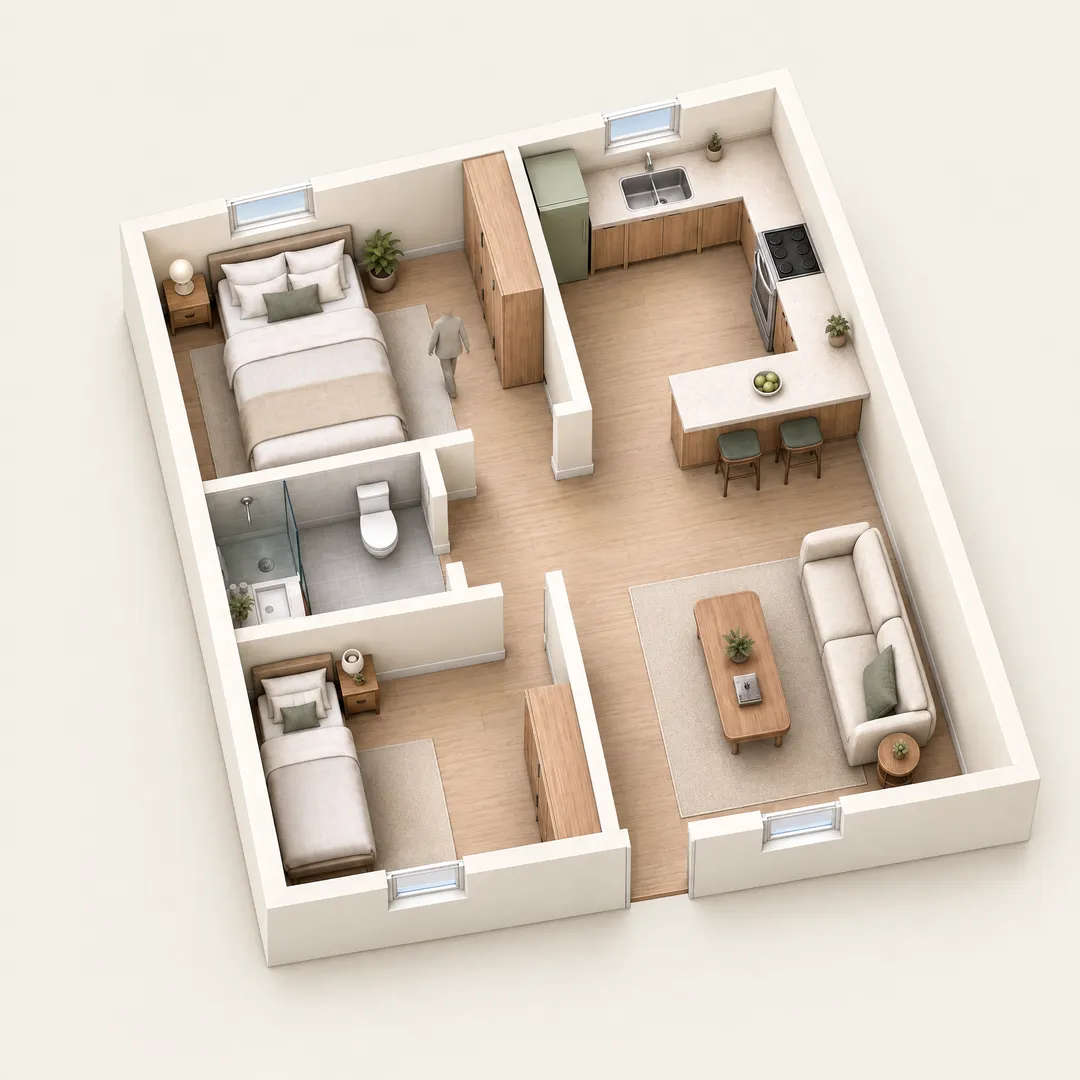
Today looks like a usual day
Recorded activity follows the usual pattern.
Something was different last night
There was more movement than usual.
A usual day, at a glance.
Example updates show how Kin compares activity with a usual day. Sensors work in the background, with nothing your parent has to wear or remember to do.
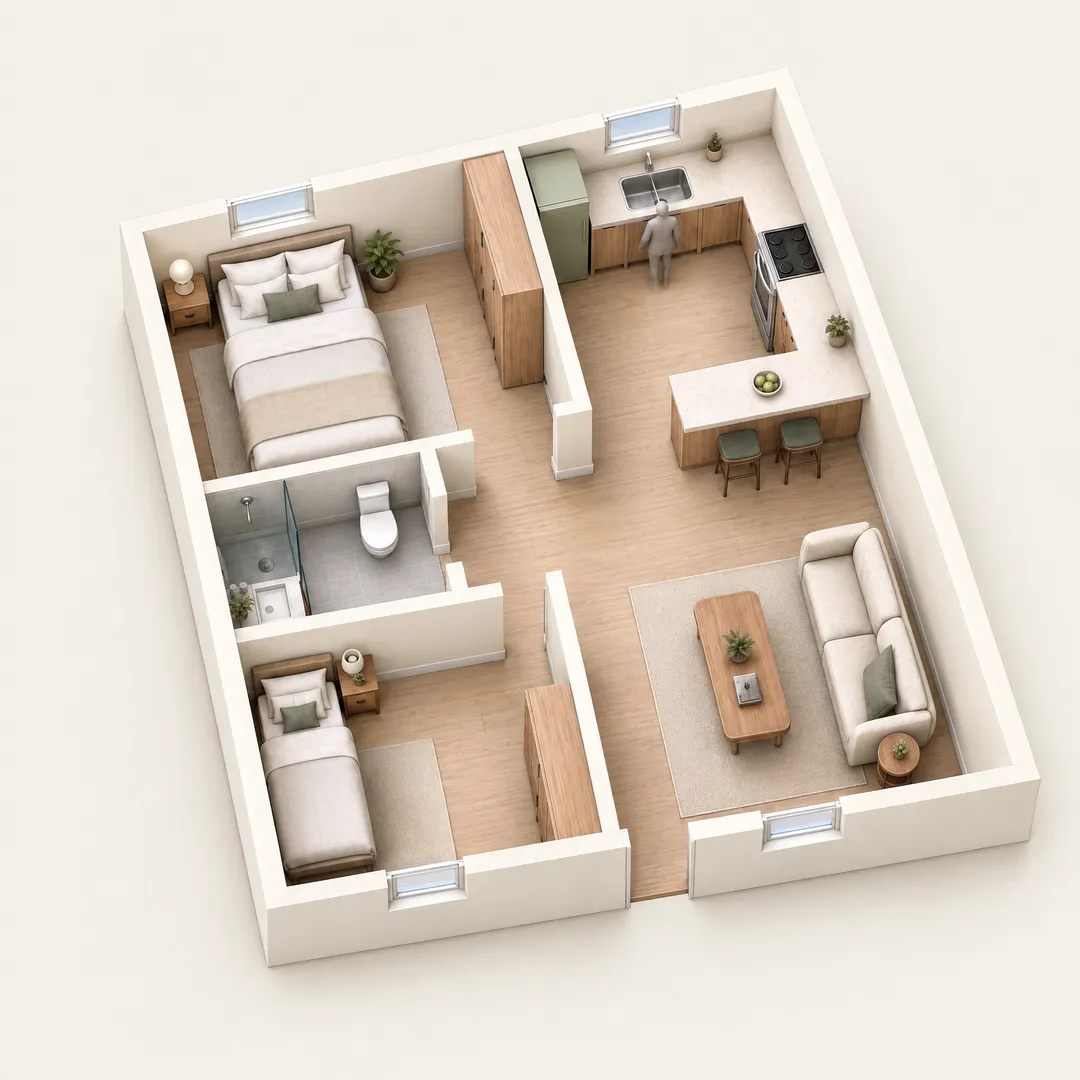
Morning started around the usual time
The day looks as expected
Today looks like a usual day
Something was different last night
There was more movement than usual.
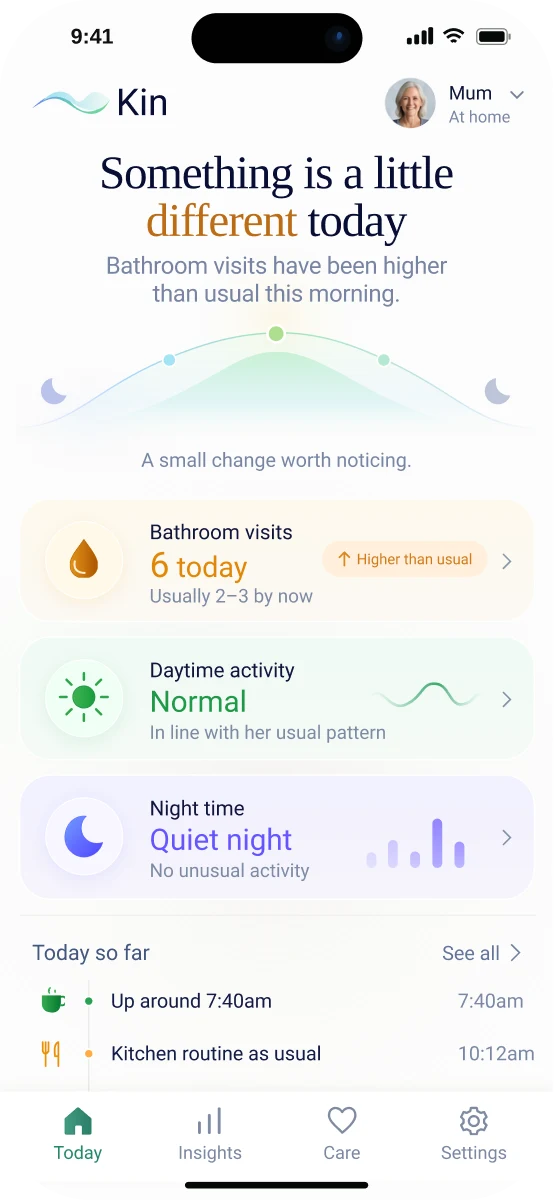
Usuallyonce or not at allLast night4 times
See when daily routines change.
More movement overnight or a quieter morning can be worth a check-in. Kin compares activity with your parent's own routines.
Kin highlights changes in activity; it cannot tell you why they happened or confirm that someone is safe. It does not replace personal check-ins, medical care or emergency services.
Their own routine is the starting point.
A late morning or a night-time bathroom visit can be normal for one person. Kin looks for changes from your parent's own patterns.
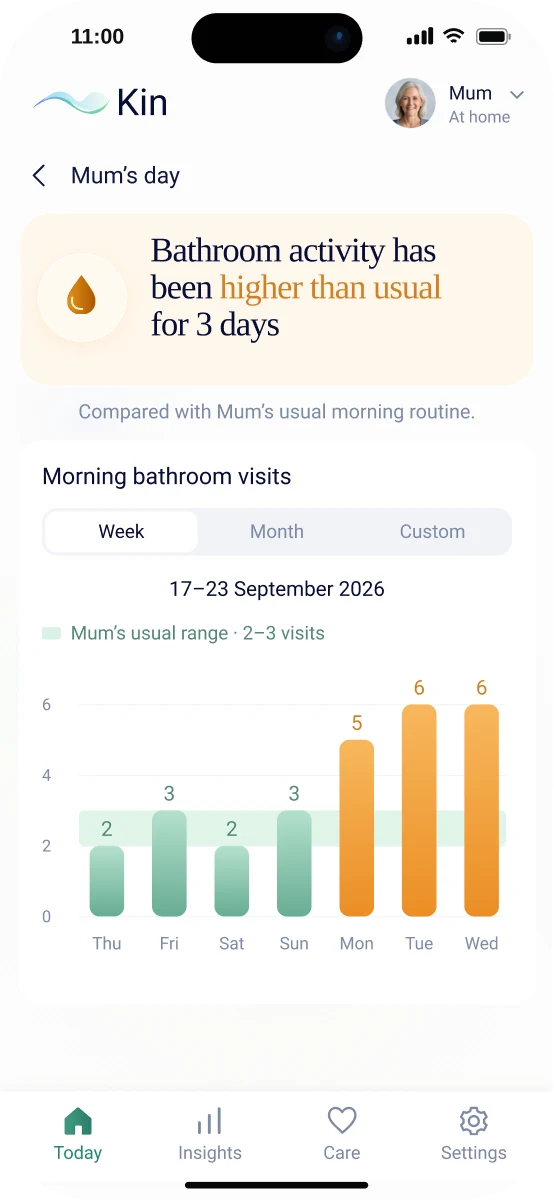
Kin learns when and where activity usually happens in the home. That pattern gives later updates their context.
Four sensors. One hub. Your phone.
Place the sensors, connect the hub and choose the rooms in the app. Kin then begins learning the home's usual activity patterns.
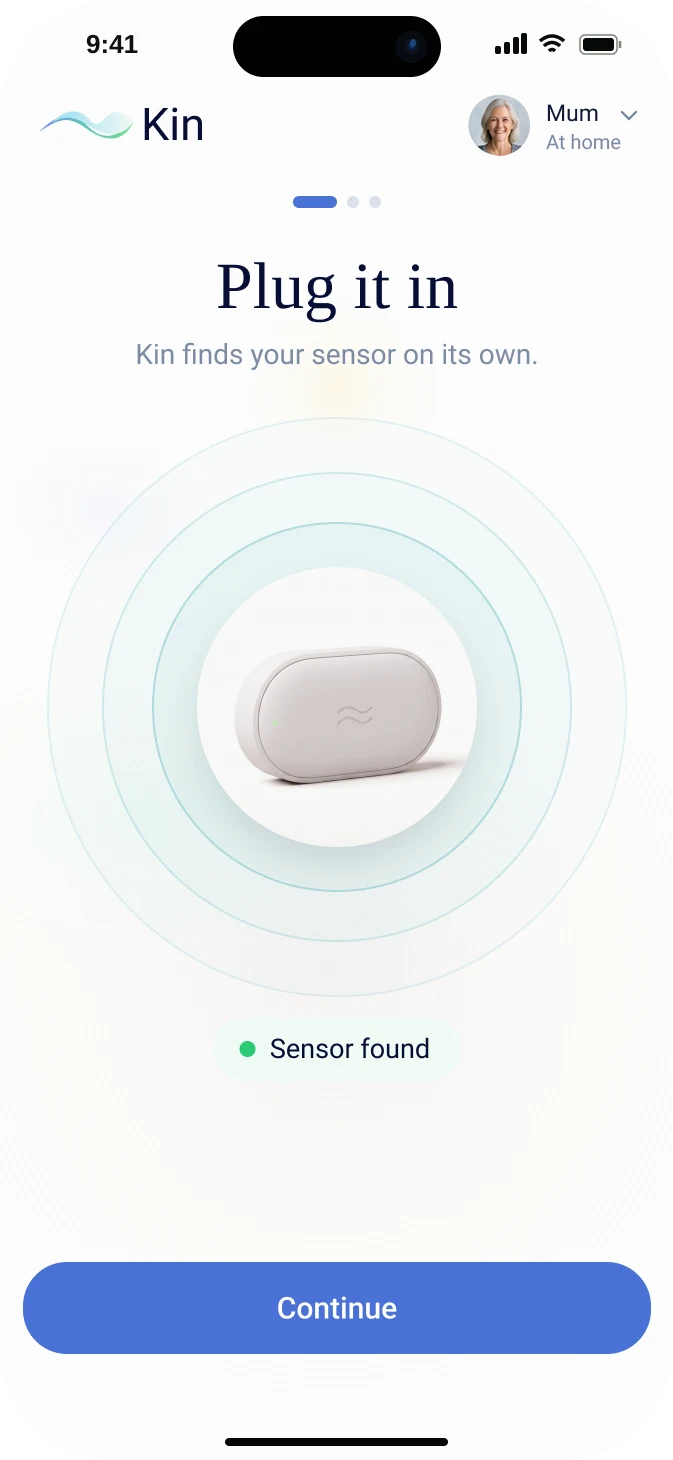
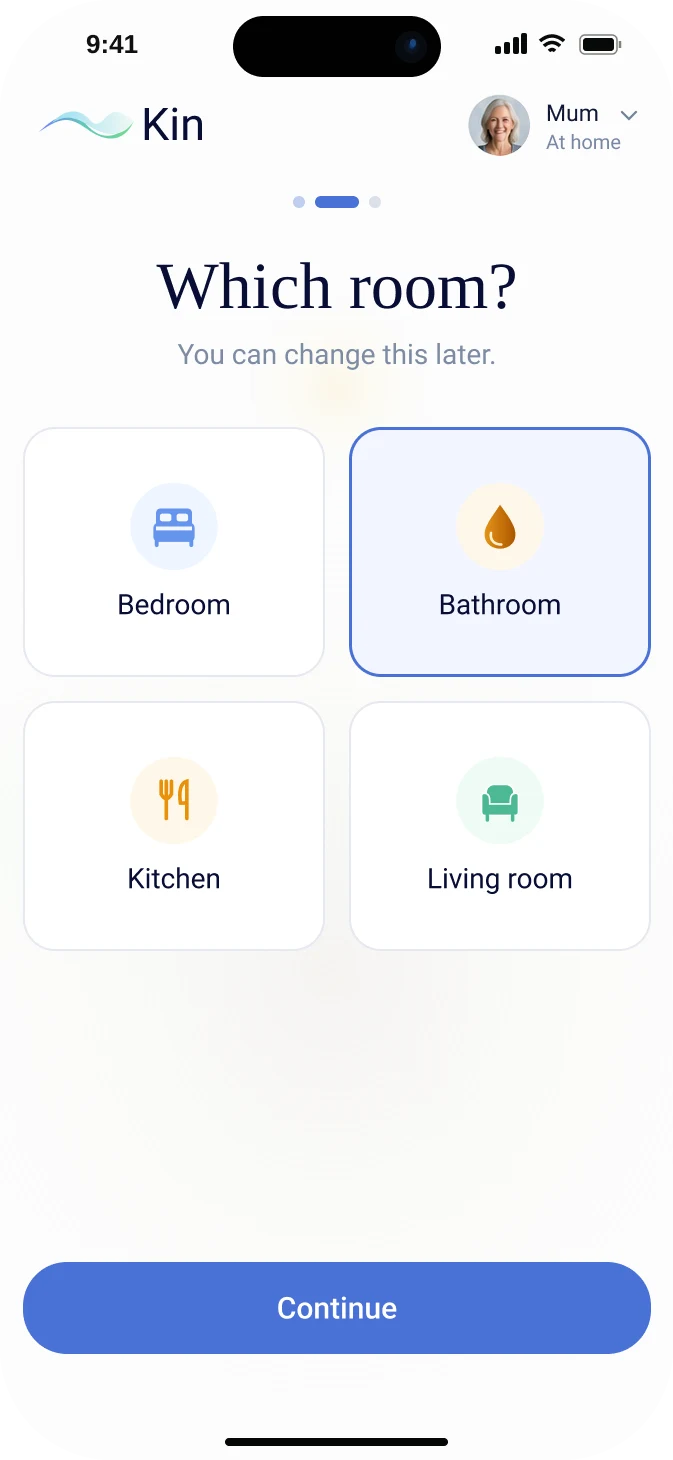
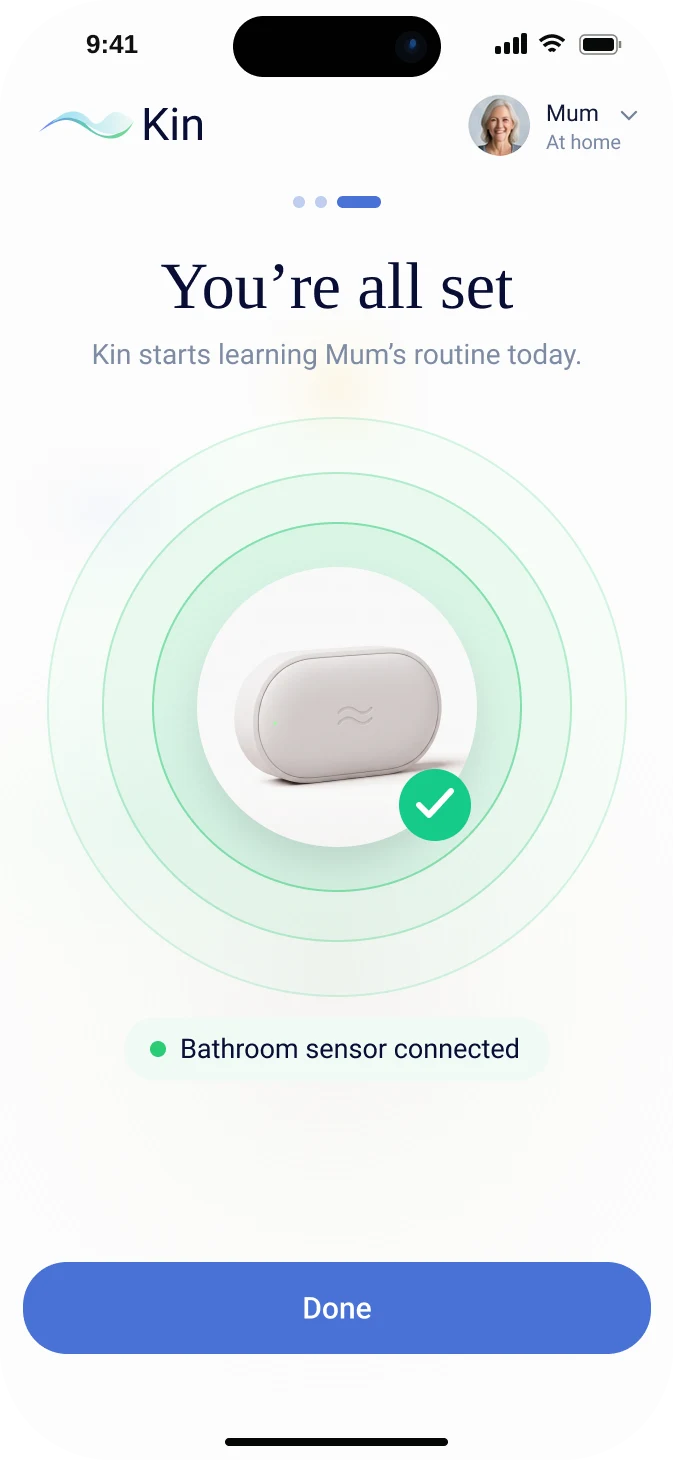
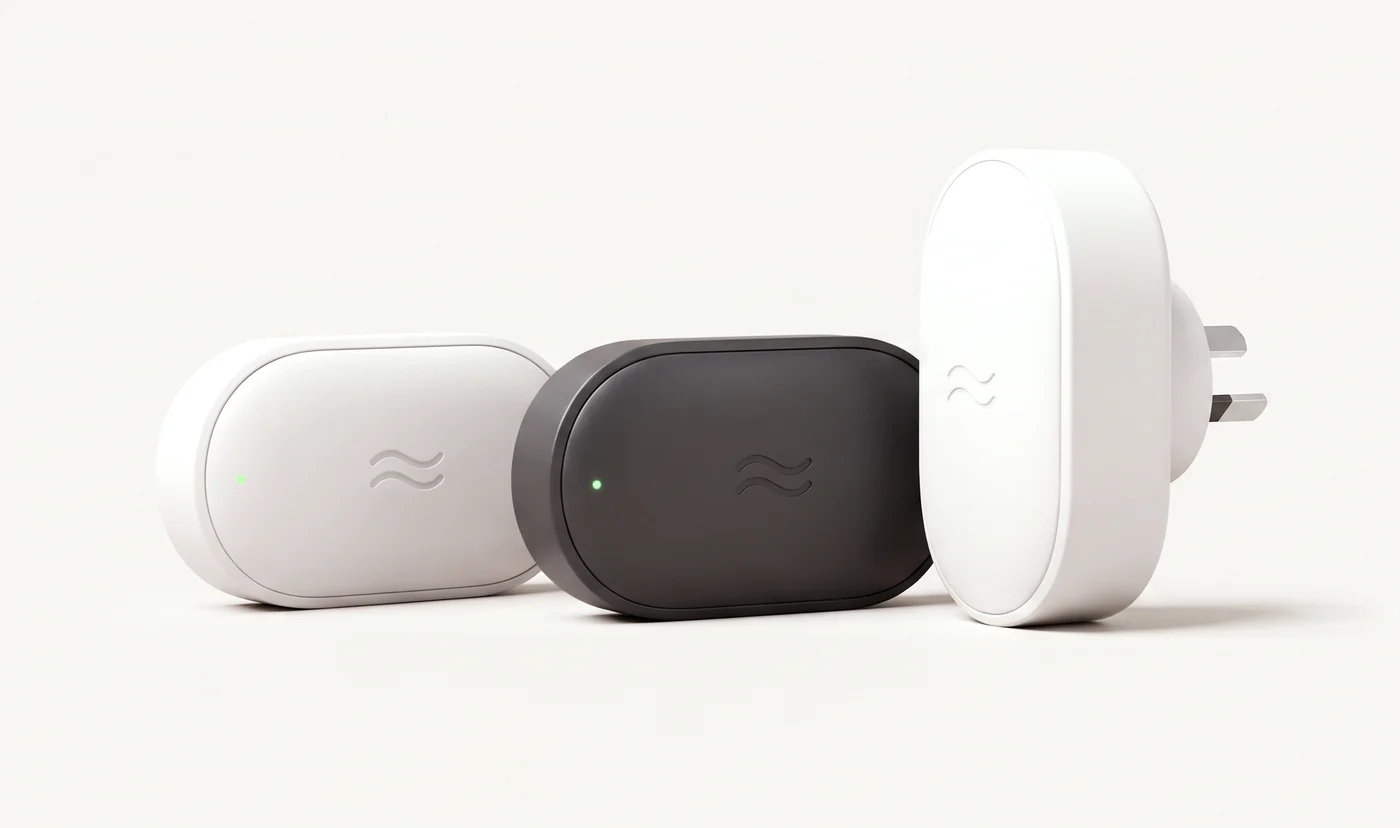
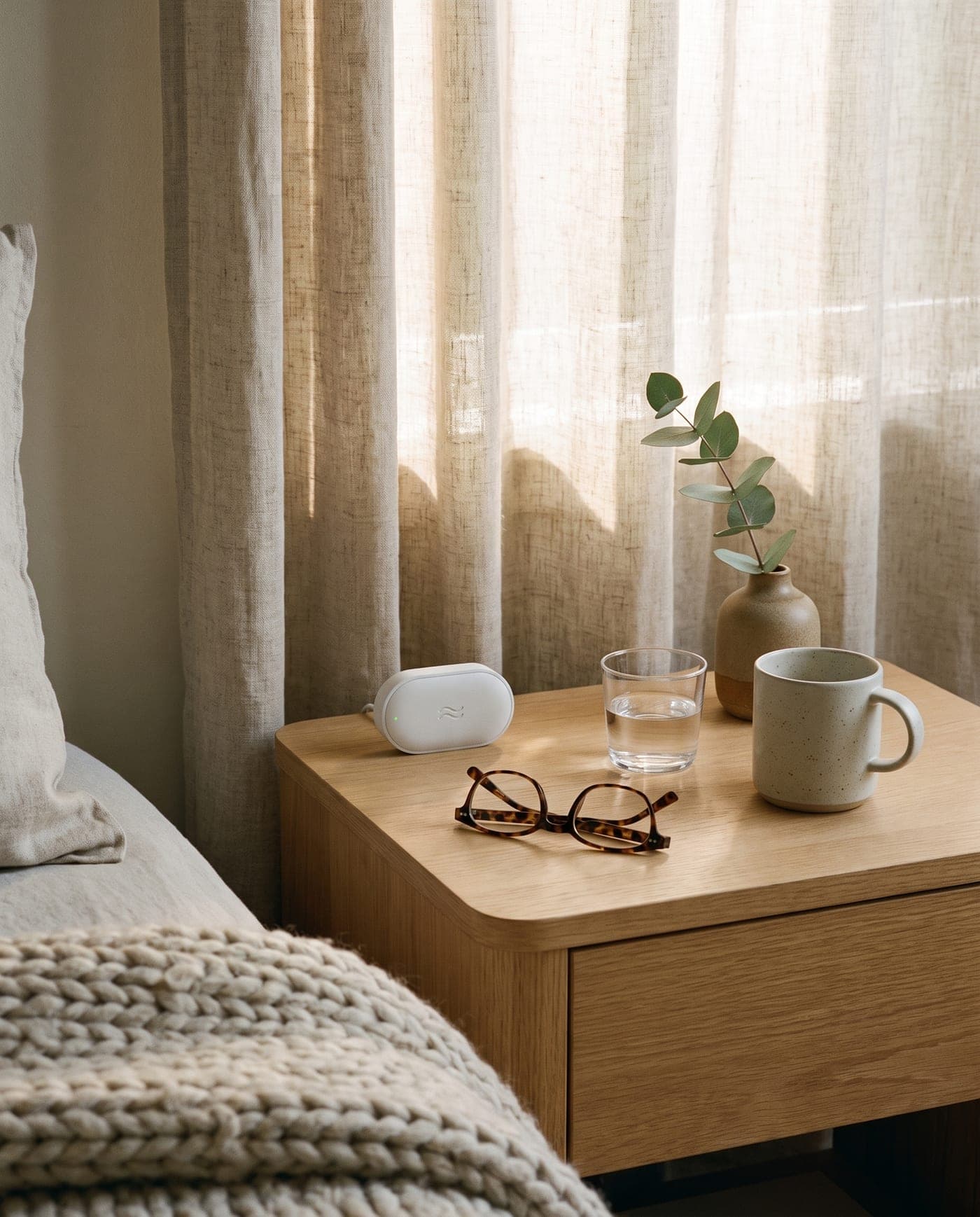
Small and discreet, in porcelain or graphite. Place them on a shelf or plug them directly into the wall.
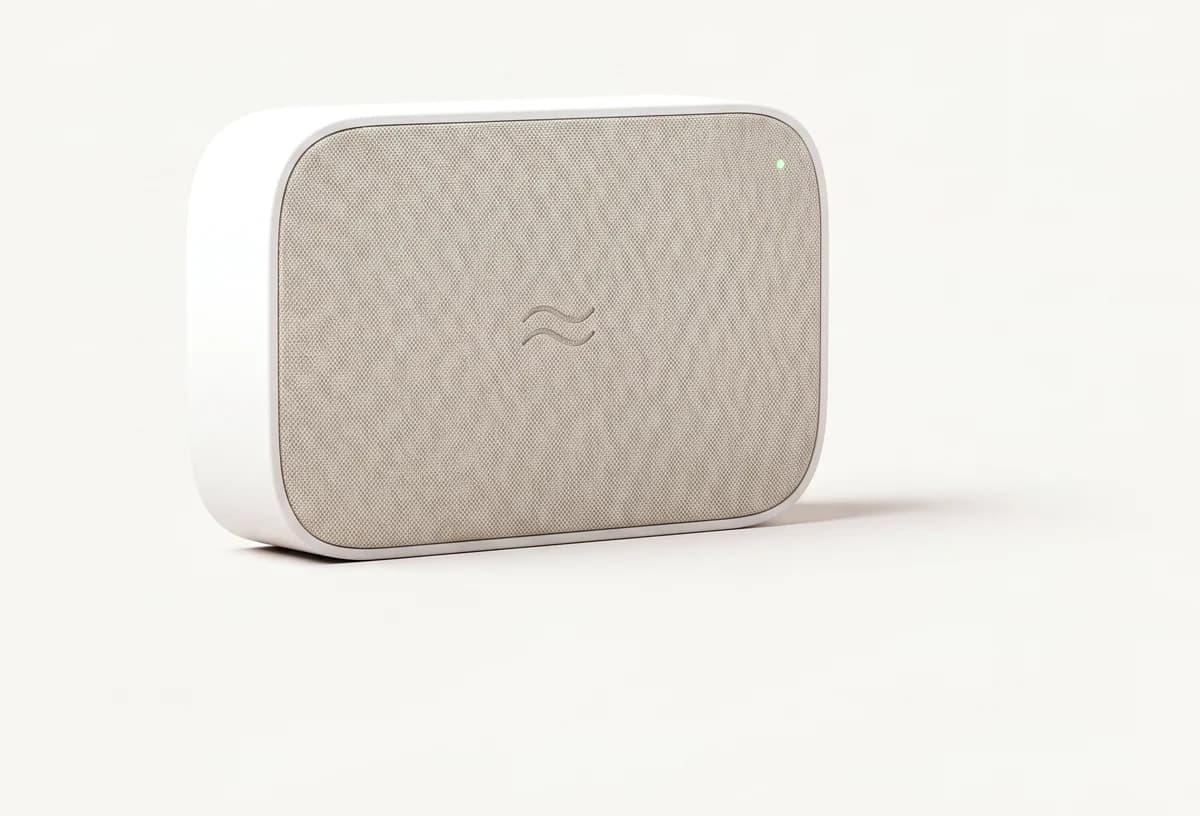
Sits quietly in the home and keeps everything connected.

Support that respects their space.
Kin uses sensors without cameras or microphones to understand activity patterns. Its privacy goals include learning in the home and sharing only agreed summaries. Read our privacy approach before introducing Kin into a home.
Hear when Kin is ready for your family.
Request early-access and availability updates by email. If you're considering Kin for a care setting, book a conversation with our team.
Opens a prepared email. Send it to request a place on the waitlist, or write to hello@syntropiclabs.ai. Ask about availability in your area, pricing, home requirements and the initial learning period before deciding whether Kin is right for you.